
Emergency Medicine · Gastroenterology
A Belt of Fire After the Wedding Feast
A woman with severe epigastric pain radiating to her back has a very high lipase and a drying-out circulation. Make the diagnosis, recognise early organ dysfunction, and resuscitate with measured balanced crystalloid before she tips into shock and lung injury.
How the case starts
46-year-old woman, brought in from the triage waiting area by her husband and a triage nurse. Eight hours of severe epigastric pain going through to the back, started after a heavy meal at a wedding. Repeated vomiting and almost no urine today. Known gallstones, no alcohol, no regular medicines. On triage she looks dry and uncomfortable with a heart rate of 118, pressure 106 over 64, temperature 37.9 and saturations 95 percent on air. She has not had analgesia or any fluids and a cannula has just been placed.
What the team practises
- Establish the diagnosis from the history, lipase and imaging and identify the likely cause (gallstones, alcohol, triglycerides).
- Resuscitate early with measured balanced crystalloid, reassessing perfusion, urine output and the chest rather than following a fixed volume.
- Recognise early organ dysfunction (respiratory, renal, circulatory) and escalate to high dependency.
- Give effective analgesia and antiemetics, and look for cholangitis and hypocalcaemia.
On the monitor
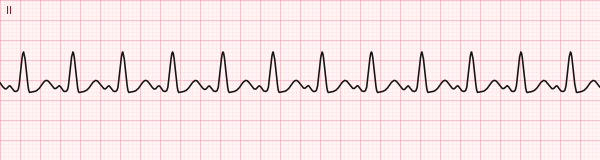
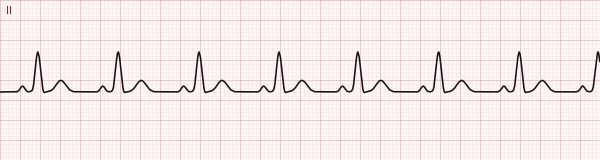
The case moves through these rhythms on Ruqelo Sim's live monitor as the team works.
Running it in Ruqelo Sim
- The instructor picks the case and reads the handover; the monitor and the learner's screen join with a QR code
- The patient answers questions in their own words, and a resus nurse voice reads back every order
- The case moves on as the team acts, and every action is timed for the debrief
Similar cases
Run “A Belt of Fire After the Wedding Feast” with your team
Ruqelo Sim runs the monitor, the instructor's controls and the patient on three iPads, tablets or computers, all in sync. From $19 a month, cancel any time.
 Also in the browser on any iPad, tablet or computer.