
Emergency Medicine · Toxicology
A Slow Heart, a Long QT
A man who swallowed his rhythm-control tablets is slow, hypotensive, hypoglycaemic and has a markedly prolonged QT. Recognise sotalol poisoning, give magnesium, correct potassium, raise the heart rate by pacing or isoprenaline, and be ready for torsades de pointes.
How the case starts
58-year-old man with atrial fibrillation on sotalol, a water tablet and an ACE inhibitor, with mild kidney disease. About three hours ago he swallowed most of a month's supply of his sotalol after losing his business. His son found him pale and cold at home. Paramedics: pulse 48, blood pressure 96 over 54, SpO2 96 percent on room air, glucose 3.2. One cannula in the right forearm. Atropine was given with little change in the pulse. No other treatment.
What the team practises
- Recognise beta-blocker toxicity: bradycardia, hypotension, hypoglycaemia, and the added QT prolongation of sotalol.
- Give magnesium, correct potassium and glucose, and raise the heart rate by pacing or isoprenaline to prevent torsades.
- Choose the right rescue therapies for shock (glucagon, high-dose insulin with glucose, vasopressors) and know that atropine often fails.
- Treat pulseless torsades with immediate defibrillation and plan dialysis and ICU care.
On the monitor
The case moves through these rhythms on Ruqelo Sim's live monitor as the team works.
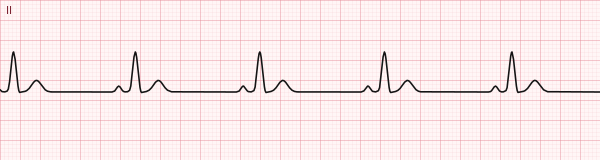
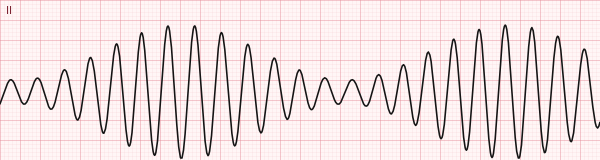
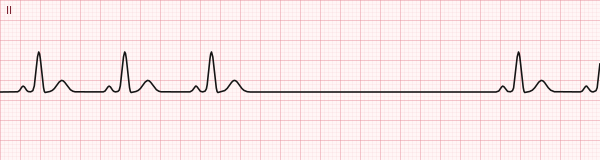
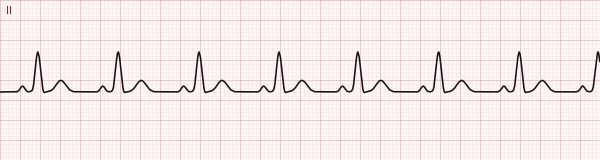
Running it in Ruqelo Sim
- The instructor picks the case and reads the handover; the monitor and the learner's screen join with a QR code
- The patient answers questions in their own words, and a resus nurse voice reads back every order
- The case moves on as the team acts, and every action is timed for the debrief
Similar cases
Run “A Slow Heart, a Long QT” with your team
Ruqelo Sim runs the monitor, the instructor's controls and the patient on three iPads, tablets or computers, all in sync. From $19 a month, cancel any time.
 Also in the browser on any iPad, tablet or computer.