
Obstetrics & Gynaecology · OBGYN
Born in the Triage Corridor
A grand multipara delivers precipitously at the ED door and then bleeds heavily with a soft, boggy uterus. Work through tone, tissue, trauma and thrombin, start uterotonic treatment, and run the resuscitation through shock and arrest.
How the case starts
34-year-old woman, fifth pregnancy, term, who delivered precipitously in the back of a car at the hospital entrance about twenty minutes ago. Healthy baby boy, cord clamped by the paramedic, placenta delivered intact and brought with her. Since delivery she has been bleeding steadily with clots. Heart rate 118, blood pressure 98 over 58, pale and clammy. History of postpartum haemorrhage after her last baby. One cannula placed; no drug given. The baby is with the paediatric nurse.
What the team practises
- Apply the four Ts of postpartum haemorrhage (tone, tissue, trauma, thrombin) systematically and identify uterine atony.
- Start fundal massage or bimanual compression and uterotonic drugs together with early tranexamic acid.
- Activate the massive obstetric haemorrhage protocol, call obstetrics, anaesthesia and the blood bank, and resuscitate with blood products and a plan for fibrinogen.
- Run the hypovolaemic arrest and escalate to balloon tamponade or surgical control; describe the immediate care of the newborn.
On the monitor
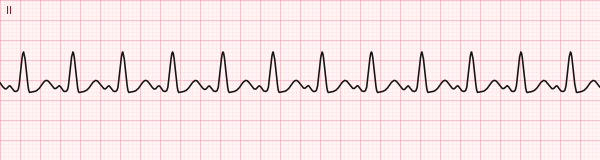
The case moves through this rhythm on Ruqelo Sim's live monitor as the team works.
Running it in Ruqelo Sim
- The instructor picks the case and reads the handover; the monitor and the learner's screen join with a QR code
- The patient answers questions in their own words, and a resus nurse voice reads back every order
- The case moves on as the team acts, and every action is timed for the debrief
Similar cases
Run “Born in the Triage Corridor” with your team
Ruqelo Sim runs the monitor, the instructor's controls and the patient on three iPads, tablets or computers, all in sync. From $19 a month, cancel any time.
 Also in the browser on any iPad, tablet or computer.