
Emergency Medicine · Toxicology
Yellow Rings Around the Lights
An older woman on digoxin has vomited for two days, sees yellow halos and has a slow, odd rhythm with scooped ST segments. Recognise chronic digoxin toxicity with kidney injury, treat the potassium carefully and give digoxin-specific antibody fragments before the rhythm degenerates.
How the case starts
79-year-old woman on long-term digoxin for atrial fibrillation and heart failure. Two days of vomiting, poor intake, confusion today and yellow halos around lights. A new rhythm-control tablet was added at the clinic last week. Paramedics: heart rate 84, blood pressure 104 over 62, glucose normal. Monitor shows a regular rhythm with odd ST segments. One cannula. No drugs given.
What the team practises
- Recognise chronic digoxin toxicity from the history, the visual symptoms and the ECG (atrial tachycardia with block, scooped ST, bidirectional VT).
- Identify the precipitants: kidney injury from vomiting and an interacting drug.
- Give digoxin-specific antibody fragments for life-threatening arrhythmia, hyperkalaemia or end-organ toxicity, and know that levels are unreliable afterwards.
- Manage potassium safely and avoid treatments that worsen digoxin toxicity.
On the monitor
The case moves through these rhythms on Ruqelo Sim's live monitor as the team works.
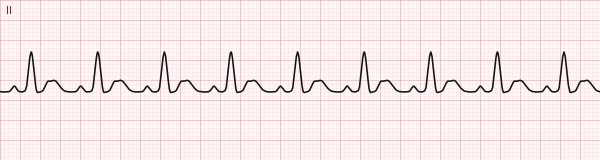 Atrial tachycardia with 2:1 block (digoxin toxicity)
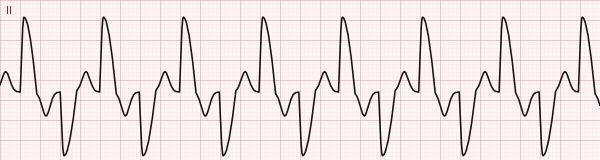 Bidirectional VT (digoxin toxicity)
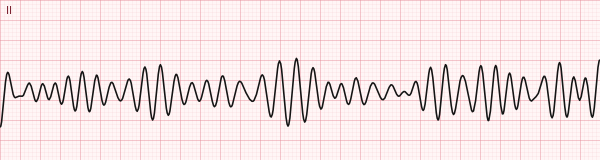 Ventricular fibrillation
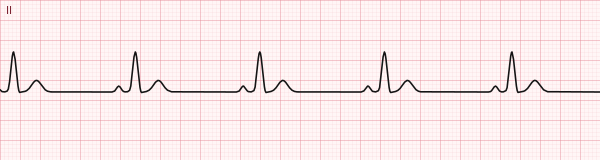 Sinus bradycardia
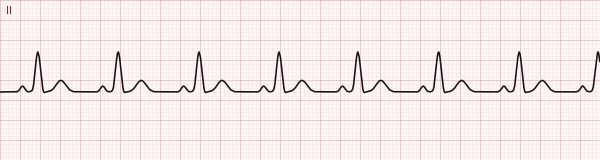 Sinus rhythm
Running it in Ruqelo Sim
- The instructor picks the case and reads the handover; the monitor and the learner's screen join with a QR code
- The patient answers questions in their own words, and a resus nurse voice reads back every order
- The case moves on as the team acts, and every action is timed for the debrief
Similar cases
Run “Yellow Rings Around the Lights” with your team
Ruqelo Sim runs the monitor, the instructor's controls and the patient on three iPads, tablets or computers, all in sync. From $19 a month, cancel any time.
 Also in the browser on any iPad, tablet or computer.