
Surgery · Urology & Nephrology
Blood at the Tip After the Dune Crash
A young man thrown from a quad bike in the desert has a pelvic fracture, a swollen perineum and blood at the urethral opening. Do not pass a blind catheter. Resuscitate the bleeding, define the urethral injury, and drain the bladder safely.
How the case starts
27-year-old man, thrown from a quad bike at a desert camp about ninety minutes ago and landing across the handlebars. Awake throughout. He has pelvic and left flank pain, cannot pass urine and has blood at the tip of the penis. Perineal bruising noted by the paramedic. Heart rate 114, blood pressure 106 over 64, saturations 96 percent. The paramedic placed a cannula, started a litre of saline and attempted to pass a urinary catheter, which would not go. The pelvis has not been bound.
What the team practises
- Recognise the signs of urethral injury (blood at the meatus, perineal haematoma, high-riding prostate, inability to void) and avoid blind catheterisation.
- Run the trauma primary survey and resuscitate haemorrhage first: pelvic binder, blood products, tranexamic acid per local protocol.
- Choose a retrograde urethrogram or suprapubic catheter for urinary drainage, and delayed-phase CT for renal and bladder injury.
- Coordinate trauma, urology and orthopaedics and plan operative or angiographic haemorrhage control.
On the monitor
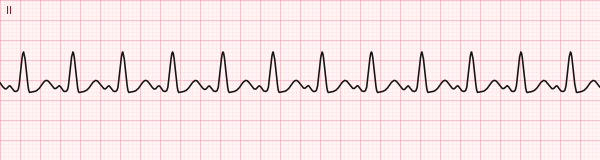
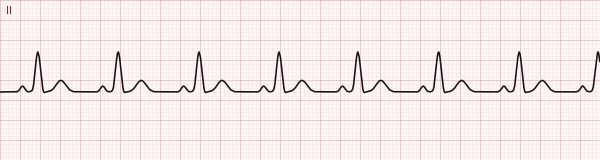
The case moves through these rhythms on Ruqelo Sim's live monitor as the team works.
Running it in Ruqelo Sim
- The instructor picks the case and reads the handover; the monitor and the learner's screen join with a QR code
- The patient answers questions in their own words, and a resus nurse voice reads back every order
- The case moves on as the team acts, and every action is timed for the debrief
Similar cases
Run “Blood at the Tip After the Dune Crash” with your team
Ruqelo Sim runs the monitor, the instructor's controls and the patient on three iPads, tablets or computers, all in sync. From $19 a month, cancel any time.
 Also in the browser on any iPad, tablet or computer.