
Emergency Medicine · Urology & Nephrology
The Long Drive and the Cold Tablets
A man with an enlarged prostate cannot pass urine after a long journey and a decongestant. The bladder is huge. Catheterise, measure what drains, watch for diuresis and infection, and do not miss the early signs of urosepsis if he is left waiting.
How the case starts
71-year-old man with known benign prostatic enlargement brought by his wife. Eleven hours of being unable to pass urine after a five-hour drive, with severe lower abdominal pain and only dribbling. He took two cold and flu tablets over the last two days. Constipated for three days. Heart rate 106, pressure 168 over 96, saturations 97 percent, temperature 37.3. Paramedics felt a firm suprapubic mass. No catheter has been attempted and he has had no analgesia. No back pain or leg weakness reported.
What the team practises
- Recognise acute urinary retention and identify precipitants (anticholinergic or decongestant drugs, constipation, immobility, infection).
- Perform urethral catheterisation, or arrange a suprapubic catheter if that fails, and record the drained volume.
- Screen for red flags (cauda equina, infection, kidney injury) and send urine and blood tests.
- Monitor for post-obstructive diuresis and hypotension after decompression.
On the monitor
The case moves through these rhythms on Ruqelo Sim's live monitor as the team works.
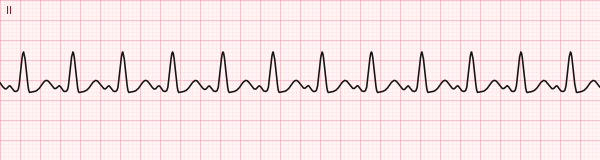
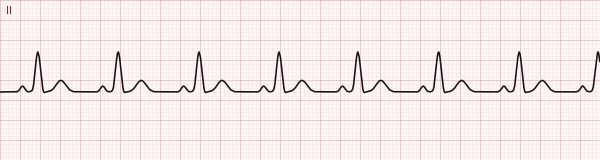
Running it in Ruqelo Sim
- The instructor picks the case and reads the handover; the monitor and the learner's screen join with a QR code
- The patient answers questions in their own words, and a resus nurse voice reads back every order
- The case moves on as the team acts, and every action is timed for the debrief
Similar cases
Run “The Long Drive and the Cold Tablets” with your team
Ruqelo Sim runs the monitor, the instructor's controls and the patient on three iPads, tablets or computers, all in sync. From $19 a month, cancel any time.
 Also in the browser on any iPad, tablet or computer.