
Emergency Medicine · Bradycardia
Symptomatic slow rhythm, complete heart block
Slow wide rhythm with low blood pressure. Transcutaneous pacing scenario.
How the case starts
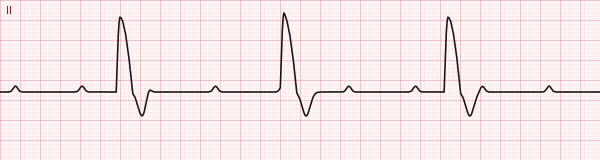
Adult with dizziness and weakness. The monitor shows a slow wide-complex rhythm around 36 with a low blood pressure. Atrial and ventricular activity look unrelated.
What the team practises
- Recognise symptomatic bradycardia with adverse features and a high-grade block pattern.
- Follow the unstable bradycardia sequence: oxygen if needed, atropine first, then pacing or an infusion while arranging pacing.
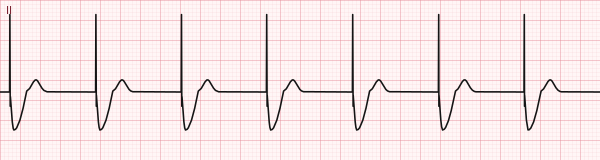
- Start transcutaneous pacing safely: pads, rate, current to electrical capture, then confirm mechanical capture with a pulse.
- Look for reversible causes such as ischaemia, drugs and electrolytes.
On the monitor
The case moves through these rhythms on Ruqelo Sim's live monitor as the team works.
Running it in Ruqelo Sim
- The instructor picks the case and reads the handover; the monitor and the learner's screen join with a QR code
- The patient answers questions in their own words, and a resus nurse voice reads back every order
- The case moves on as the team acts, and every action is timed for the debrief
Similar cases
Run “Symptomatic slow rhythm, complete heart block” with your team
Ruqelo Sim runs the monitor, the instructor's controls and the patient on three iPads, tablets or computers, all in sync. From $19 a month, cancel any time.
 Also in the browser on any iPad, tablet or computer.