
Emergency Medicine · Bradycardia
The Pacemaker Check Was Next Month
An elderly man with a pacemaker is dizzy and slow, with pacing spikes that are not followed by a QRS. Recognise failure to capture, support the rate with transcutaneous pacing or a drug, and find out why the lead is failing.
How the case starts
81-year-old man with a single-chamber pacemaker for complete heart block inserted three months ago. Dizzy spells and two near-falls since lifting a heavy box yesterday. Paramedics: monitor shows pacing spikes at 70 but the pulse is slower, blood pressure 92 over 54, glucose normal. One cannula. No drugs given.
What the team practises
- Recognise pacemaker failure to capture: spikes not followed by a QRS, with a pulse slower than the spike rate.
- Support the heart rate with transcutaneous pacing or a chronotropic infusion while the device team is called.
- Manage ventricular standstill as a non-shockable arrest with pacing.
- Look for the causes: lead displacement, high threshold, electrolytes, ischaemia, drugs and battery.
On the monitor
The case moves through these rhythms on Ruqelo Sim's live monitor as the team works.
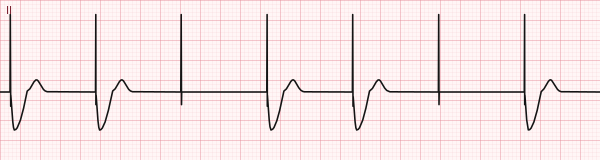 Pacemaker failure to capture
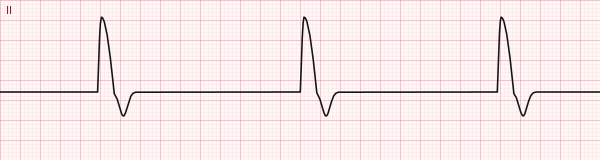 Idioventricular rhythm
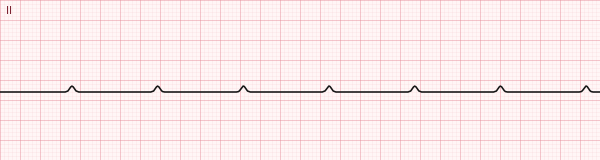 Ventricular standstill (P waves, no QRS)
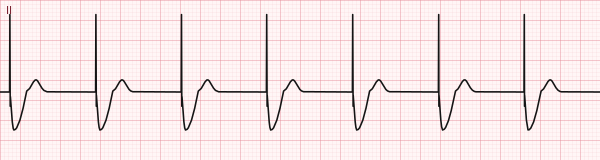 Ventricular paced rhythm
Running it in Ruqelo Sim
- The instructor picks the case and reads the handover; the monitor and the learner's screen join with a QR code
- The patient answers questions in their own words, and a resus nurse voice reads back every order
- The case moves on as the team acts, and every action is timed for the debrief
Similar cases
Run “The Pacemaker Check Was Next Month” with your team
Ruqelo Sim runs the monitor, the instructor's controls and the patient on three iPads, tablets or computers, all in sync. From $19 a month, cancel any time.
 Also in the browser on any iPad, tablet or computer.