
Emergency Medicine · Environmental
The Cadet Who Stopped Making Sense
A security-forces cadet collapses at the end of a long summer march, hot and confused. Recognise exertional heat stroke, measure a core temperature, cool him fast in ice water before anything else, and keep cooling even through a cardiac arrest.
How the case starts
22-year-old cadet in his second week of training, collapsed at the end of a fourteen-kilometre march in full kit at about 43 degrees ambient. Found confused and combative, then unresponsive. Skin hot and sweaty. Camp medics poured water over him and placed him in the shade. Heart rate 148, blood pressure 102 over 54, respiratory rate 34, saturations 94 percent, rectal temperature 41.8. One cannula in place. No fluids given. He took a supplement with stimulants and little water. No past illness or medications known.
What the team practises
- Recognise exertional heat stroke: core temperature above 40 degrees with central nervous system dysfunction.
- Cool first, transport second: ice-water or cold-water immersion to reach below 39 degrees within thirty minutes, with rectal temperature monitoring.
- Manage complications: seizures, rhabdomyolysis, hyperkalaemia, coagulopathy, hypoglycaemia and acute kidney injury.
- Continue active cooling during arrest and post-arrest care; stop cooling at 38 to 39 degrees.
On the monitor
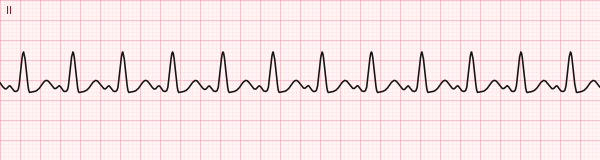
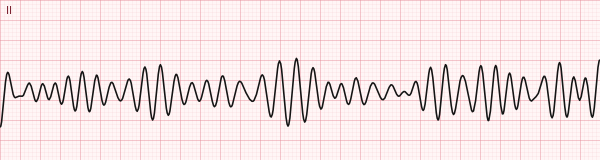
The case moves through these rhythms on Ruqelo Sim's live monitor as the team works.
Running it in Ruqelo Sim
- The instructor picks the case and reads the handover; the monitor and the learner's screen join with a QR code
- The patient answers questions in their own words, and a resus nurse voice reads back every order
- The case moves on as the team acts, and every action is timed for the debrief
Similar cases
Run “The Cadet Who Stopped Making Sense” with your team
Ruqelo Sim runs the monitor, the instructor's controls and the patient on three iPads, tablets or computers, all in sync. From $19 a month, cancel any time.
 Also in the browser on any iPad, tablet or computer.