
Emergency Medicine · Neurology
The Worst Headache of Her Life
A woman with a sudden occipital headache and a brief collapse has deep T wave inversion and a raised troponin. The team reaches for antiplatelet and anticoagulant drugs. Pause: a thunderclap headache needs a head CT first, because this is a subarachnoid haemorrhage with a stunned heart.
How the case starts
47-year-old woman, hypertensive and a smoker, with a sudden severe occipital headache three hours ago while lifting a pot. Brief collapse at onset, then vomiting three times. Stiff neck and light hurts her eyes. Pressure 196 over 112, pulse 96, saturation 97, sugar 6.8. Ambulance 12-lead shows deep T wave inversion across the chest leads, and the paramedic suspected a heart attack. She has not had any aspirin or heparin. Mother died young of a brain bleed. One cannula, no medications given.
What the team practises
- Recognise a thunderclap headache as a high-risk secondary headache and avoid anchoring on an ECG.
- Apply the time-based rule: non-contrast CT within six hours of onset is highly sensitive; know what to do if it is normal.
- Hold antithrombotic drugs until a bleed is excluded and control the pressure and the risk of re-bleeding.
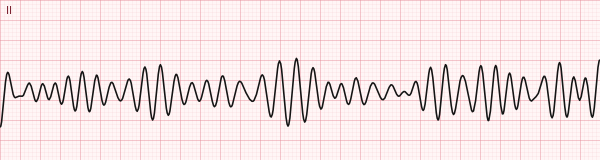
- Recognise neurogenic myocardial stunning and manage a re-bleed with arrhythmia.
On the monitor
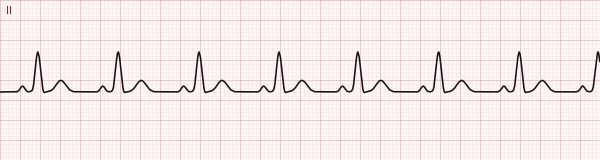
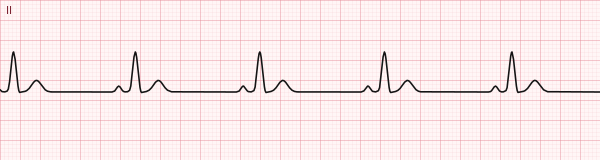
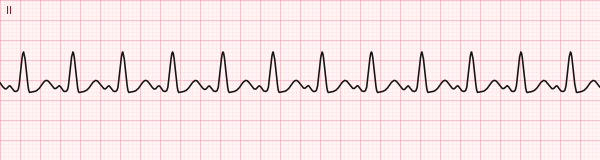
The case moves through these rhythms on Ruqelo Sim's live monitor as the team works.
Running it in Ruqelo Sim
- The instructor picks the case and reads the handover; the monitor and the learner's screen join with a QR code
- The patient answers questions in their own words, and a resus nurse voice reads back every order
- The case moves on as the team acts, and every action is timed for the debrief
Similar cases
Run “The Worst Headache of Her Life” with your team
Ruqelo Sim runs the monitor, the instructor's controls and the patient on three iPads, tablets or computers, all in sync. From $19 a month, cancel any time.
 Also in the browser on any iPad, tablet or computer.